Arizona Homeowners Insurance and Monsoon Flooding: What Your Policy Doesn't Cover
By Josh Cotner
Arizona Homeowners Insurance and Monsoon Flooding: What Your Policy Doesn't Cover
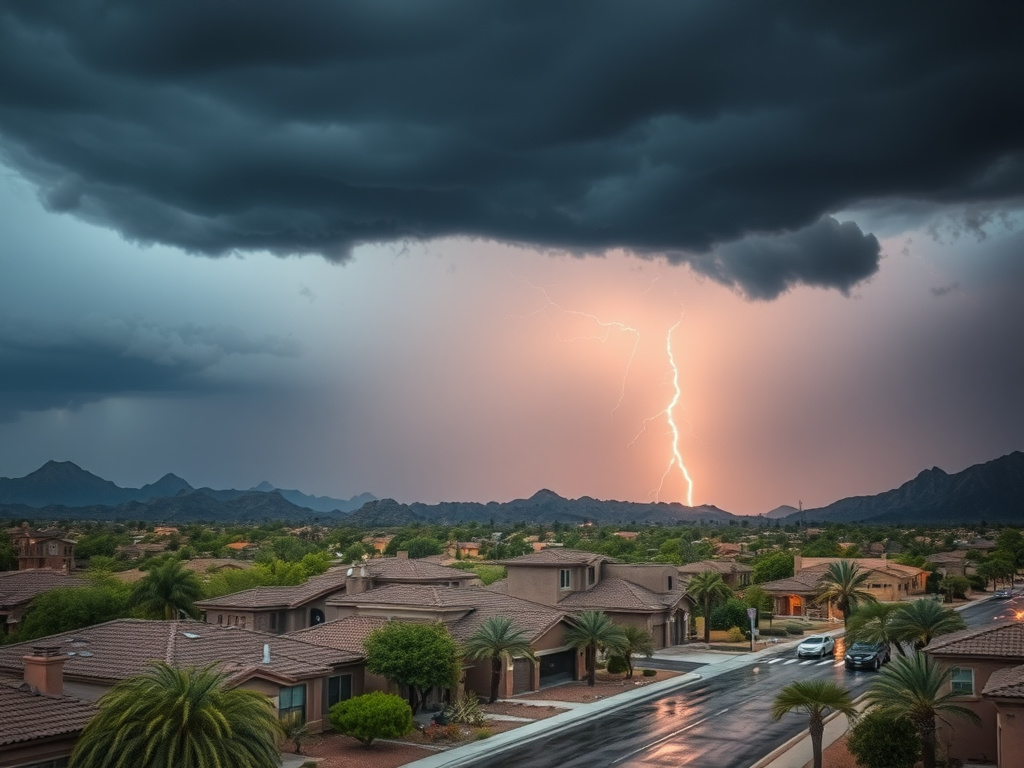
Every summer, the same thing happens across the Phoenix metro and Tucson. Monsoon storms drop 2 inches of rain in an hour. Washes run full. Streets flood. And somewhere, an Arizona homeowner watches water pour under their front door and reaches for their insurance card — only to find out that their standard homeowners policy doesn't cover a single dollar of flood damage.
This is not a policy detail. It's a complete exclusion. And it catches thousands of Arizona homeowners off guard every year.
The Flood Exclusion in Standard Arizona Homeowners Policies
Every standard HO-3 homeowners policy — regardless of carrier — contains a broad exclusion for flood damage. The exact language varies, but the result is the same: if water enters your home from the ground up, it's excluded.
This means:
- Flash flooding from a wash overflowing
- Stormwater runoff pooling against your foundation
- Monsoon rain that enters through low-lying doors or windows
- Street flooding that backs into your garage
None of it is covered. The damage to your floors, walls, furniture, appliances, and personal property is entirely your responsibility unless you have separate flood insurance.
Who Is at Risk in Arizona?
The risk is more widespread than most homeowners realize. FEMA flood maps identify the highest-risk areas — typically properties near rivers, washes, and canals — but monsoon flooding in Arizona regularly affects properties outside mapped flood zones.
The Phoenix metro has over 100 named washes and hundreds of miles of drainage infrastructure. During intense monsoon events, that infrastructure can be overwhelmed. Low-lying neighborhoods in Chandler, Gilbert, Mesa, Glendale, and Peoria have all experienced flash flooding well outside FEMA's designated flood zones.
In Tucson, the Rillito River corridor and dozens of smaller arroyos create similar risk. Older neighborhoods with inadequate storm drainage are particularly vulnerable.
NFIP vs. Private Flood Insurance for Arizona Homes
You have two main options for flood coverage:
NFIP (National Flood Insurance Program): The federal program that most people know as "flood insurance." NFIP policies are sold through private agents but backed by FEMA. They cover up to $250,000 for the structure and $100,000 for contents — sold as separate policies. NFIP rates are standardized and don't vary by insurer.
Private flood insurance: Private flood markets have expanded significantly in recent years. Private policies can offer:
- Higher coverage limits (above NFIP's $250,000 cap)
- Replacement-cost coverage on contents (NFIP pays actual cash value)
- Broader triggers — some private policies cover losses that NFIP excludes
- Shorter waiting periods (NFIP has a 30-day waiting period; some private policies bind immediately)
For most Arizona homeowners, we compare both options and recommend based on flood zone, home value, and how quickly coverage is needed before monsoon season.
The 30-Day Waiting Period Problem
NFIP policies have a 30-day waiting period from the date of purchase before coverage takes effect. This means you cannot buy flood insurance when a storm is in the forecast and expect to be covered.
In Arizona, where monsoon season runs from mid-June through September, that waiting period matters. If you don't have flood coverage in place before the season starts, you're unprotected for any early-season events.
Private flood policies sometimes offer shorter waiting periods — as little as 14 days, or in some cases immediate coverage with a binding inspection. If you're approaching monsoon season without coverage, private flood may be your best option.
What Flood Insurance Actually Covers
It's also worth understanding what flood insurance covers — and what it doesn't.
Covered under building coverage:
- Foundation, walls, floors, ceilings
- Electrical and plumbing systems
- HVAC equipment
- Built-in appliances
- Detached garages (at 10% of building coverage under NFIP)
Covered under contents coverage (if separately purchased):
- Clothing, furniture, electronics
- Portable appliances
- Curtains
- Some valuable items (with limits)
Not covered by flood insurance:
- Vehicles (covered under comprehensive auto insurance)
- Temporary housing while your home is being repaired (loss of use)
- Currency, precious metals, stock certificates
- Property outside the building (landscaping, fences, decks under NFIP)
The loss of use gap is significant. If your home is uninhabitable after a flood, your flood insurance policy does not pay for your hotel or temporary housing. That's covered by your homeowners policy's loss of use provision — which only applies if the underlying cause of loss is covered under your homeowners policy. Since flood is excluded, you may have no loss of use coverage for a flood event.
Some private flood policies bundle additional living expenses. Ask us about that option if it's important to you.
How to Know if You Need Flood Coverage
You should seriously consider flood insurance if:
- Your home is within a quarter-mile of any named wash, canal, or drainage corridor
- Your neighborhood has experienced flooding in the past 20 years (neighbors and local news archives are good sources)
- Your lot is at or below street grade
- Your garage or lower level is at or below street level
- Your property is in a FEMA Special Flood Hazard Area (your lender will require it)
- You're in a neighborhood with older storm drainage that wasn't designed for current housing density
If you're not sure about your flood risk, FEMA's Flood Map Service Center (msc.fema.gov) lets you check your property's flood zone designation. But remember — being outside a high-risk zone doesn't mean you have no flood risk. Roughly 25% of NFIP flood claims come from properties outside designated high-risk areas.
Getting Flood Coverage for Your Arizona Home
We compare NFIP and private flood options for Arizona homeowners and recommend based on your specific property, timeline, and coverage needs. If you're approaching monsoon season without flood coverage, contact us now — the 30-day NFIP waiting period means there's no time to delay.
Need this coverage for your Arizona home?
Get a real quote in about 15 minutes — we compare 12+ A-rated carriers for your Arizona home.